Osaka
📍 Japan
☀️ Best: March–May & October–November 💰 $120–280
<h2>Osaka: Japan's Kitchen and Comedian</h2>
<p>Osaka has a personality entirely distinct from Tokyo — louder, funnier, more food-obsessed, and more direct. The Osaka phrase <em>kuidaore</em> (eat until you drop) is not hyperbole; it is the organising principle of the city. Dotonbori canal and the neon-lit streets of Namba constitute one of Asia's great nocturnal streetscapes, and the local food — takoyaki (octopus balls), okonomiyaki (savoury pancakes), kushikatsu (deep-fried skewers), and ramen styles markedly different from Tokyo's — is the reason food-focused travellers rank Osaka above almost every other Asian city.</p>
<h2>Dotonbori and Namba</h2>
<p>Dotonbori is the heart of tourist Osaka — the canal lined with enormous illuminated signage including the iconic Glico Running Man neon that has been photographed billions of times. The streets behind Dotonbori contain the greatest density of food stalls, restaurants and street food in Japan. Arrive at dusk when the neon comes to life and eat continuously through the evening. America-mura (American Village) nearby is Osaka's youth fashion district — a Japanese interpretation of US streetwear culture that is worth exploring for its visual energy alone.</p>
<h2>Osaka Castle and Shinsekai</h2>
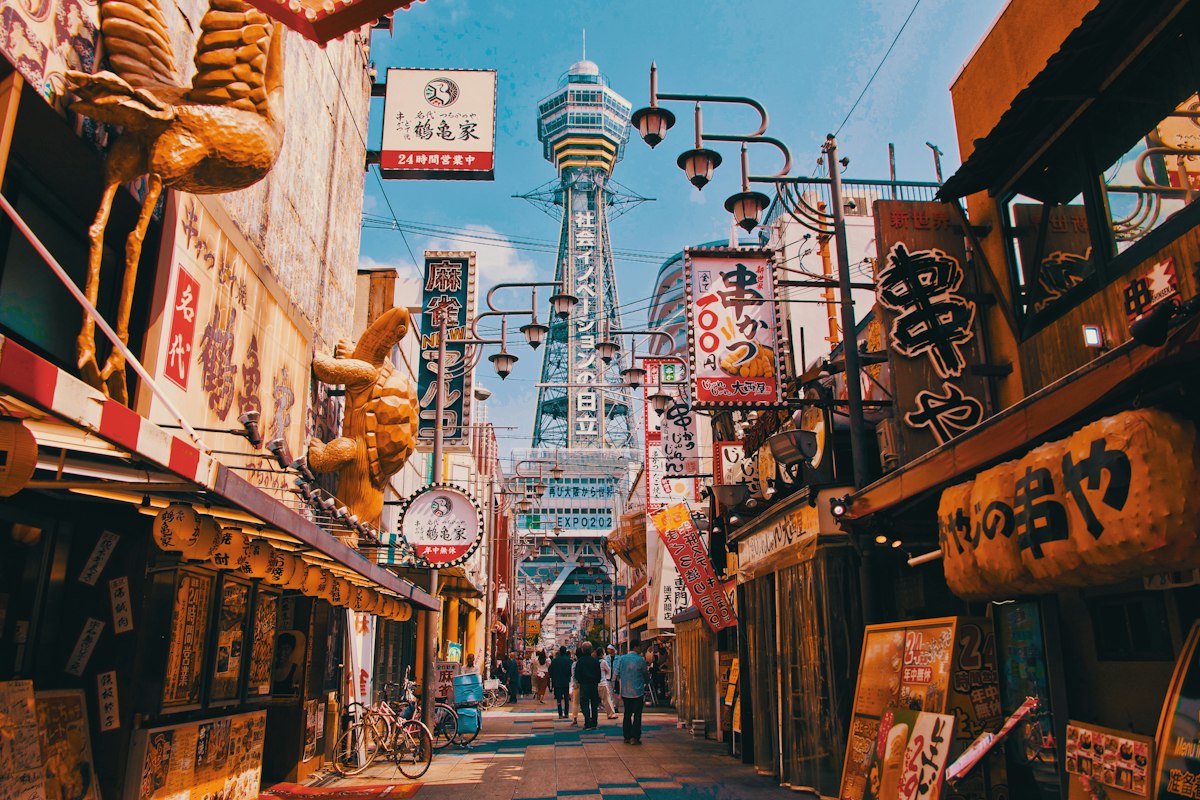
<p>Osaka Castle (1583, reconstructed 1931) sits within a large public park with excellent cherry blossom in late March to early April. The museum inside covers the history of Toyotomi Hideyoshi, who built the original castle, and the Osaka campaigns of 1614–1615. Shinsekai (literally "New World") is a retro district built in the 1910s that has preserved its Showa-era atmosphere: dart-game shops, old-school izakayas, the Tsutenkaku Tower, and the best kushikatsu in the city at dirt-cheap prices.</p>
<h2>Day Trips from Osaka</h2>
<p>Kyoto is 15 minutes by shinkansen or 75 minutes by Hankyu train — the proximity makes Kyoto entirely accessible as a day trip (though it deserves more time). Nara is 45 minutes from Osaka by Kintetsu or JR — the free-roaming deer of Nara Park and the enormous Daibutsu (Great Buddha) at Todai-ji temple are among Japan's most memorable experiences. Kobe is 30 minutes west — the beef, the harbour and the Kitano foreign settlement district warrant a half-day visit.</p>
<h2>Getting There and Practical Information</h2>
<p>Osaka's Kansai International Airport receives direct flights from Sydney (approximately 10 hours) with Jetstar. Osaka Itami Airport handles domestic connections. The Osaka Amazing Pass provides unlimited metro travel and free entry to major attractions — worthwhile for stays of 2+ days. IC cards (ICOCA, Suica) cover all metro and JR travel. Best time to visit: March–May (cherry blossom, mild weather) and October–November (autumn colours, comfortable temperatures). Budget: AUD $120–250/day. <a href="/program/world-nomads">World Nomads</a> travel insurance. <a href="/japan-rail-pass-worth-it">Japan Rail Pass guide for Australians</a>.</p>
Osaka is Japan's food capital, friendliest city and the perfect complement to Kyoto. Here's the comp…
Choosing between Tokyo and Osaka for your Japan trip? We compare costs, food, attractions and vibe t…
Tokyo, Kyoto and Osaka in one week -- the exact day-by-day route, train connections and AUD costs fo…
Osaka has a personality entirely distinct from Tokyo — louder, funnier, more food-obsessed, and more direct. The Osaka phrase kuidaore (eat until you drop) is not hyperbole; it is the organising principle of the city. Dotonbori canal and the neon-lit streets of Namba constitute one of Asia's great nocturnal streetscapes, and the local food — takoyaki (octopus balls), okonomiyaki (savoury pancakes), kushikatsu (deep-fried skewers), and ramen styles markedly different from Tokyo's — is the reason food-focused travellers rank Osaka above almost every other Asian city.
Dotonbori is the heart of tourist Osaka — the canal lined with enormous illuminated signage including the iconic Glico Running Man neon that has been photographed billions of times. The streets behind Dotonbori contain the greatest density of food stalls, restaurants and street food in Japan. Arrive at dusk when the neon comes to life and eat continuously through the evening. America-mura (American Village) nearby is Osaka's youth fashion district — a Japanese interpretation of US streetwear culture that is worth exploring for its visual energy alone.
Osaka Castle (1583, reconstructed 1931) sits within a large public park with excellent cherry blossom in late March to early April. The museum inside covers the history of Toyotomi Hideyoshi, who built the original castle, and the Osaka campaigns of 1614–1615. Shinsekai (literally "New World") is a retro district built in the 1910s that has preserved its Showa-era atmosphere: dart-game shops, old-school izakayas, the Tsutenkaku Tower, and the best kushikatsu in the city at dirt-cheap prices.
Kyoto is 15 minutes by shinkansen or 75 minutes by Hankyu train — the proximity makes Kyoto entirely accessible as a day trip (though it deserves more time). Nara is 45 minutes from Osaka by Kintetsu or JR — the free-roaming deer of Nara Park and the enormous Daibutsu (Great Buddha) at Todai-ji temple are among Japan's most memorable experiences. Kobe is 30 minutes west — the beef, the harbour and the Kitano foreign settlement district warrant a half-day visit.
Osaka's Kansai International Airport receives direct flights from Sydney (approximately 10 hours) with Jetstar. Osaka Itami Airport handles domestic connections. The Osaka Amazing Pass provides unlimited metro travel and free entry to major attractions — worthwhile for stays of 2+ days. IC cards (ICOCA, Suica) cover all metro and JR travel. Best time to visit: March–May (cherry blossom, mild weather) and October–November (autumn colours, comfortable temperatures). Budget: AUD $120–250/day. World Nomads travel insurance. Japan Rail Pass guide for Australians.
March–April: Cherry blossom season — Osaka Castle Park is extraordinary in bloom. Osaka is slightly warmer than Kyoto and Tokyo, so the bloom often comes a few days earlier. Less crowded and expensive than Kyoto during this period.
October–November: Ideal temperatures (16–22°C), autumn foliage at Osaka Castle and Minoo Waterfall (45 minutes north by train). The city's food scene is at its most vibrant and outdoor eating is perfect.
June–August: Hot and humid (30–35°C). Osaka's indoor food culture thrives year-round — air-conditioned restaurants, covered shopping arcades (Shinsaibashi, Tenjinbashisuji), and indoor markets make summer workable. Tenjin Matsuri festival (July 24–25) is one of Japan's three great festivals.
Osaka's most famous street — a canal-side strip of neon signs, street food stalls, restaurants and the iconic Glico Running Man sign. Go after 8pm when the neon reflects on the canal. Eat: takoyaki (octopus balls, AUD $4–6 per serving), kushikatsu (breaded and fried skewers, AUD $1–2 each), and Osaka-style okonomiyaki (savoury pancake). The area around Hozenji Yokocho (a small stone-paved alley with traditional restaurants) is worth finding.
The reconstructed castle (original 1583, current reconstruction 1931) is impressive from the outside and worth climbing for city views (AUD $8 entry). The grounds and surrounding park are free and beautiful — especially during cherry blossom season. Best experienced by cycling — rental bikes available nearby for AUD $10–15/day.
Osaka's public market — 170 vendors selling fresh seafood, produce, prepared foods, and street snacks. Extraordinarily fresh sushi, uni (sea urchin), wagyu, and produce at wholesale prices. Best visited at 10am on a weekday. Free entry; budget AUD $15–30 for grazing.
The Wizarding World of Harry Potter (complete with Hogsmeade, Hogwarts castle, and Butterbeer) and Super Nintendo World (Mario Kart ride, Yoshi's Adventure) make USJ one of the best theme parks in Asia. Entry AUD $90–110 per day. Express Pass (recommended for weekends, AUD $60–100 extra) allows you to skip major queue lines. Book tickets in advance online.
Osaka's main shopping corridor — Shinsaibashi-suji (covered shopping arcade) runs into Namba's American Mura (American Village) and Don Quijote department store. Anime, electronics, fashion, 100-yen shops, and the best street food concentration in the city. Free to wander; budget generously for eating and shopping.
Osaka is slightly cheaper than Tokyo, particularly for food — the city's pride in affordable good eating keeps prices competitive.
Osaka is very safe. The Dotonbori area gets extremely busy on weekend nights — pickpocketing risk is higher in dense crowds than elsewhere in Japan, though still low by world standards. The usual Japan cautions apply: carry cash, be respectful in temples and traditional spaces.
Fly into Kansai International Airport. Haruka express to Namba or Shinsaibashi (45 minutes, AUD $18). Check in. Afternoon: Dotonbori canal walk. Evening: eat everything — takoyaki, kushikatsu, okonomiyaki. Midnight: Dotonbori neon reflection from the canal bridges.
Morning: Kuromon Ichiba Market (10am). Lunch: sushi or uni at the market stalls. Afternoon: Osaka Castle and grounds. Umeda (north Osaka) for sky observatory and department store food halls. Dinner: Namba ramen street.
15 minutes to Kyoto by Hankyu train (AUD $3). Full day in Kyoto (Fushimi Inari, Gion, Arashiyama). Return to Osaka for dinner in Dotonbori. Alternatively: Nara (45 minutes by Kintetsu train) for the deer park and Todai-ji temple (the world's largest wooden building, free deer in the park).
Full day at Universal Studios Japan (book ahead) or morning at Kuromon and Namba shopping before afternoon departure flight from Kansai International Airport.